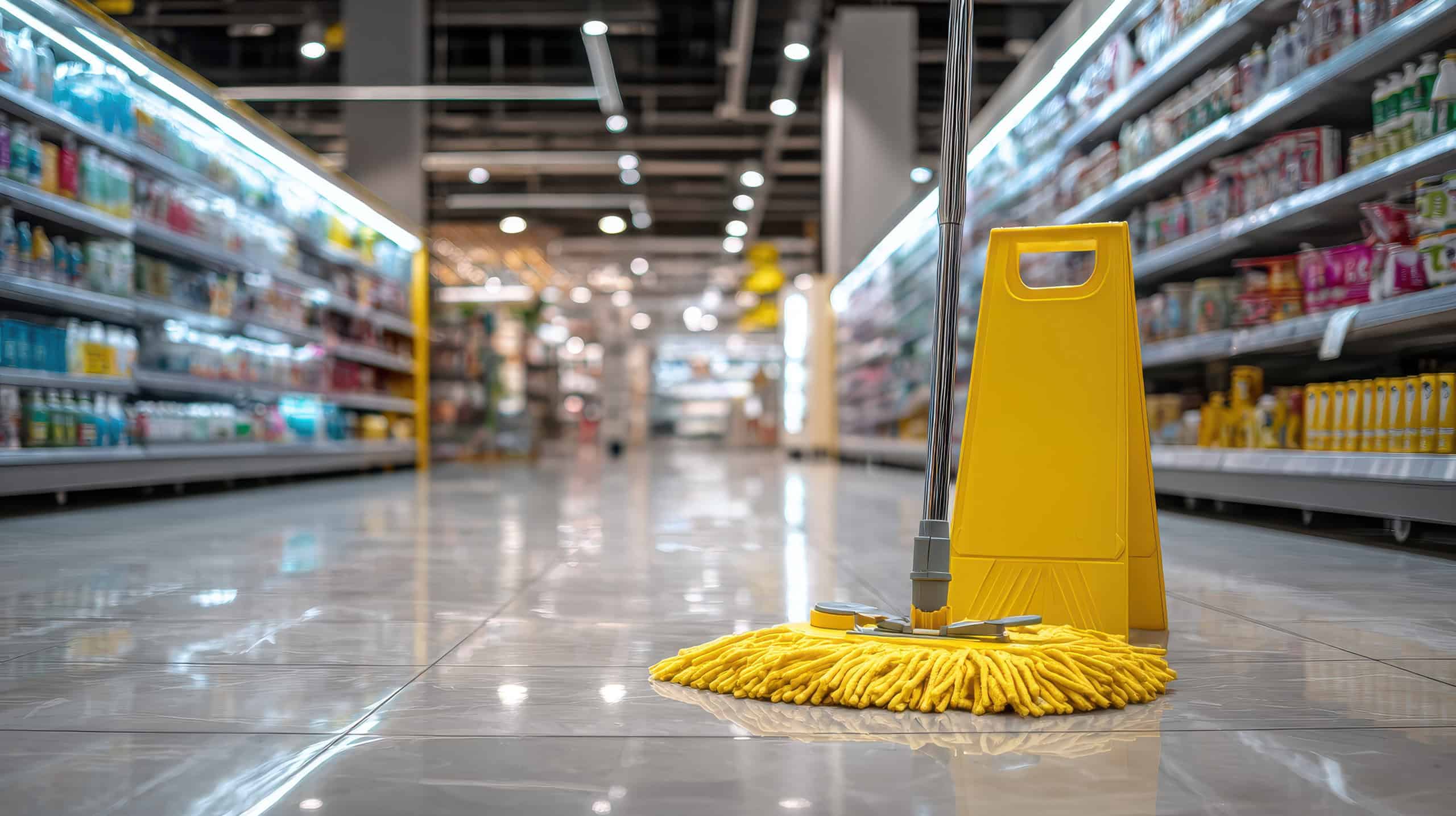
How Neglect Wears Floors Out Faster
Dirt and grit act like sandpaper. Every time someone walks across an unmaintained floor, those particles grind into the finish and dull it. Over time the protective layer thins out, scratches deepen, and soil starts working its way into the surface itself.
Once that happens, a routine scrub and polish won’t bring the floor back. The only fix is a full strip-and-refinish: removing the old finish entirely and laying down new coats from scratch. It’s labor-intensive, it takes the space out of service, and it costs significantly more than regular upkeep.
Floors that aren’t maintained often need that full restoration years earlier than they should. In the worst cases, damage reaches the flooring material itself and the conversation shifts from refinishing to replacement. What looked like savings now turns into a much bigger bill later.
The Hidden Costs Beyond the Floor
The price of a refinish is only part of the picture. Neglected floors create other costs that don’t always show up on the same line of the budget:
- Downtime. A strip-and-refinish can close hallways, lobbies or sales floors for a day or more. That disrupts staff, customers and operations.
- Emergency labor. When a floor reaches the point of no return, the work usually has to happen fast. Rush jobs and overtime cost more than planned maintenance.
- Appearance and reputation. Dull, scuffed or stained floors are one of the first things visitors notice. They send a message about how the whole facility is cared for.
- Safety. Worn finishes and built-up residue can change how a floor performs underfoot, which matters in any high-traffic space.
The good news is that all of these costs are avoidable. Most of them trace back to the same root cause: a maintenance routine that wasn’t consistent.
Protect the Investment You Already Made
The fix isn’t complicated. Routine scrubbing and polishing extends the life of the finish you already paid for. Instead of letting the protective layer wear down to nothing, regular care keeps it clean, intact and doing its job.
A solid floor care routine typically includes:
- Daily dust mopping or sweeping to remove grit before it grinds into the finish.
- Regular auto scrubbing with the right pad and chemical for the floor type, to lift soil without stripping the finish.
- Periodic burnishing or polishing to restore shine and harden the top layer.
- Scheduled top-scrub and recoat when traffic areas start to show wear, well before a full strip is needed.
A consistent routine like this costs a fraction of an emergency refinish or early replacement. It also makes budgeting more predictable, because floor care becomes a planned, steady expense instead of a surprise.
The Right Equipment and Chemicals Make the Difference
Maintenance only works when it’s done with the right tools. An auto scrubber that’s sized for the space, pads matched to the task, and chemicals formulated for the specific finish all help crews work faster and get better results. The wrong combination can do the opposite, dulling the finish or leaving residue that attracts more dirt.
That’s where a partner like Kelsan comes in. Our team works with facilities to match equipment, chemicals and procedures to the floors they actually have, so every pass protects the finish instead of wearing it down.
Find Out What Your Floors Are Really Costing You
If you’re not sure whether your current routine is protecting your floors or quietly shortening their life, it’s worth taking a closer look. A cost audit can show where money is being lost, where your program is working, and where small changes could save you from a much bigger bill down the road.